Recycling and Sustainability — Commercial Waste Hornsey
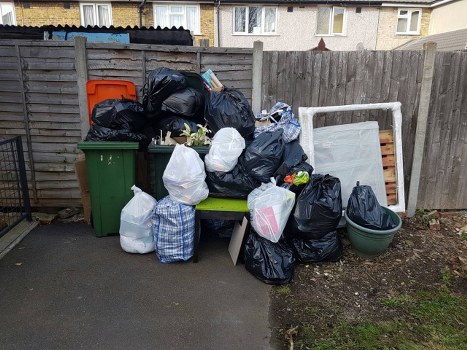 Commercial Waste Hornsey is committed to making the borough's eco-friendly waste disposal area a practical reality for businesses of every size. Our approach to managing Hornsey commercial waste blends operational efficiency with environmental ambition: we reduce landfill, increase material recovery and support a sustainable rubbish area mindset across shops, offices and light industrial premises. This page outlines targets, local infrastructure, charity partnerships and the low-carbon transport that underpin our service.
We know that sustainable waste Hornsey is not a single action but a system of separated streams, smart logistics and community collaboration. The borough's approach to waste separation — encouraging clearly labelled streams for glass, paper, mixed recycling, food organics and residual waste — shapes how we collect and process commercial rubbish. By aligning with local bin standards and business recycling guidance, our collections are designed to slot into the wider municipal network without causing contamination or extra cost.
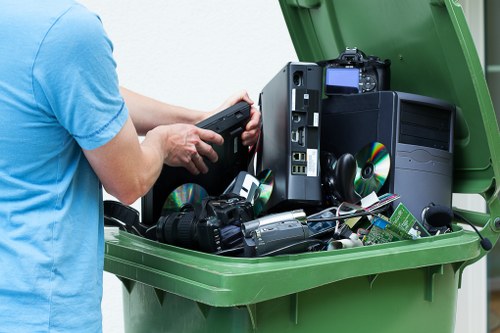 A key metric guides our planning: our recycling percentage target. We have set an ambitious aim of achieving a 70% commercial recycling rate by 2030 for Hornsey-area collections. That target covers materials diverted from landfill and sent for reuse, reprocessing or energy recovery where appropriate. It is backed by regular audits of loads, % recycling reports for customers and tailored waste reduction plans that focus on high-volume streams such as cardboard, mixed plastics, food waste and light industrial metals.
Local Transfer Stations and Material Hubs
Our logistics network relies on nearby transfer stations and material hubs across Haringey and neighbouring boroughs. We consolidate Hornsey commercial waste at designated transfer points to maximise vehicle fill, sort materials efficiently and direct each stream to the correct processing facility. Local transfer stations shorten haul routes and reduce emissions compared with longer municipal displacements, helping to keep the whole system low-carbon and cost-effective.
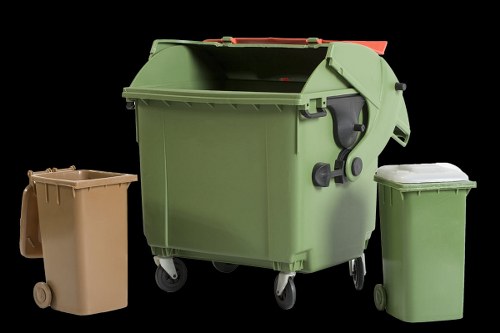 At those stations, incoming collections are further segregated into recyclable grades — paper and card, mixed containers, glass, hard plastics, organic waste, and WEEE (waste electrical and electronic equipment). We also work with specialist reprocessing plants for textiles, pallet wood and construction & demolition waste fractions, ensuring that the eco-friendly waste disposal area reaches beyond basic kerbside separation to specialist recovery where needed.
To support business compliance, we provide clear documentation for each pickup and transfer: weight tickets, composition summaries and an annual recycling performance statement. These records help companies prove sustainable procurement and disposal practices while feeding real data into our borough-level progress tracking.
Partnerships with Charities and Reuse Organisations
An effective sustainable rubbish area includes reuse as a primary strategy. We partner with local charities and redistribution networks to give items a second life. Rather than sending reusable furniture, textiles or working electronics to shred, our teams identify items suitable for donation and route them to community groups, social enterprises and accredited reuse charities. These partnerships benefit local people and reduce the burden on recycling systems.
 Our charity collaborations include furniture reuse schemes, food redistribution networks for surplus commercial food, and training partners that accept donated materials for vocational programmes. By integrating reuse channels into the commercial waste flow, Hornsey business customers see reduced disposal costs and improved social outcomes — a clear win for a sustainable waste Hornsey strategy.
 Sustainable transport is central to delivering these outcomes. We operate a fleet of low-carbon vans and trucks, prioritising fully electric vans for short urban rounds and low-emission hybrids for longer or heavier routes. This mixed fleet reduces particulate and CO2 emissions across Hornsey's streets. Drivers follow optimised routing and load consolidation principles so the environmental savings from recycling are not offset by inefficient transport.
To help businesses meet the 70% recycling percentage target we emphasise practical interventions: compacting cardboard at source, using separated food waste caddies for catering operations, pre-sorting back-of-house packaging, and replacing single-use materials with reusable alternatives where possible. We also offer training sessions and simple signage packs so staff understand the borough's separation approach and avoid contaminants appearing in dry recycling and organic streams.
Our service model for Hornsey commercial waste includes regular performance reviews, targeted engagement with higher-volume producers and incentive-based schemes for tenants of managed buildings. A circular approach — where materials are designed and managed to stay in productive use — is central to reducing overall waste tonnage while increasing the value recovered from each collection.
We report progress transparently: quarterly summaries show diversion rates, greenhouse gas savings from route optimisation and emissions reductions from electric vehicle use. The communal aim is clear — to make Hornsey a demonstrable example of how a commercial area can shift from linear disposal to circular resource use. With local transfer stations, charity partnerships and a low-carbon van fleet, our plan turns policy into practical action across the borough.
